

Common diet mistakes that ruin results
Starting a new diet often feels hopeful.
You plan your meals. You clear out the pantry. You follow the rules. For a few weeks, everything feels structured and focused.
Then progress slows.
Energy dips. Cravings increase. Motivation fades.
In many cases, the issue isn’t lack of discipline. It’s simple, common diet mistakes that quietly sabotage results. As of February 2026, nutrition research continues to show that sustainability, balance, and consistency matter more than extremes.
This guide walks through the common diet mistakes that ruin results — and how to fix them in practical, realistic ways.
Why Diet Results Stall (Even When You’re Trying Hard)
Diet outcomes rarely fail because someone “didn’t try.” They stall because:
- Meals lack balance
- Expectations are unrealistic
- Food quality is overlooked
- Diets are followed too rigidly
According to ongoing public health guidance from the Harvard T.H. Chan School of Public Health, long-term success depends more on sustainable eating patterns than strict elimination strategies.
Let’s look at where things often go wrong.
1. Choosing a Diet That Doesn’t Fit Your Lifestyle
One of the most common diet mistakes that ruin results is picking a plan that looks impressive but doesn’t fit your daily life.
A diet that requires:
- Elaborate prep every day
- Ingredients you don’t enjoy
- Social isolation at meals
…is unlikely to last.
How to Fix It
Before committing to a diet style, ask:
- Can I cook this way most weeks?
- Do I enjoy these foods?
- Can I follow this without constant stress?
If you’re unsure which approach aligns with your needs, review How to Choose the Right Diet for Your Body to clarify fit before committing.
2. Ignoring Protein and Fiber Balance
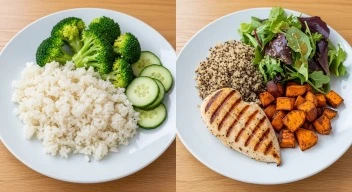
Many diets fail not because of carbs or fats, but because meals lack adequate protein and fiber.
Protein supports satiety.
Fiber supports digestion and fullness.
Without both, cravings increase.
The Academy of Nutrition and Dietetics continues to emphasize adequate fiber and protein intake across dietary patterns.
How to Fix It
Each meal should include:
- A quality protein source
- Vegetables or fiber-rich foods
Even in keto or gluten-free plans, fiber remains essential.
For structure guidance, revisit How to Build Balanced Meals for Any Diet to correct imbalances.
3. Over-Relying on “Diet-Labeled” Products

Gluten-free cookies.
Keto desserts.
Vegan processed meats.
These can fit occasionally. But daily reliance often reduces nutrient density.
Ultra-processed substitutes may:
- Increase calorie density
- Reduce fiber
- Disrupt satiety cues
The World Health Organization (WHO) continues to recommend minimizing highly processed foods across dietary styles.
How to Fix It
Shift focus toward:
- Whole vegetables
- Legumes
- Lean proteins
- Whole grains (if your diet allows)
Treat specialty products as occasional tools — not staples.
4. Cutting Calories Too Aggressively
Severe calorie restriction often leads to:
- Low energy
- Muscle loss
- Increased hunger
- Diet fatigue
Research from the National Institutes of Health (NIH) shows that extreme restriction often triggers compensatory hunger responses.
How to Fix It
Instead of drastic cuts:
- Increase protein
- Increase vegetables
- Moderate portions gradually
Sustainable deficits outperform dramatic ones.
5. Treating One “Off Meal” as Failure
One high-calorie meal does not ruin progress.
But the mindset that it does often leads to:
- All-or-nothing thinking
- Abandoning the plan entirely
- Emotional eating
How to Fix It
View meals individually, not morally.
Consistency across weeks matters more than perfection in a day.
6. Not Planning for Social Situations
Many diet results stall because:
- Social events aren’t anticipated
- Eating out feels overwhelming
- Restrictions feel isolating
How to Fix It
Prepare flexible strategies:
- Eat protein beforehand
- Choose simple, whole-food options
- Practice portion moderation
Balance is not broken by participation.
7. Underestimating Portion Sizes
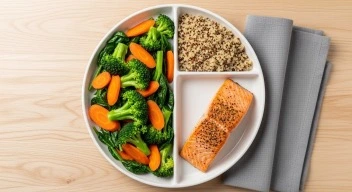
Even healthy foods can exceed energy needs when portions grow unintentionally.
This applies across diets:
- Large handfuls of nuts
- Extra olive oil
- Large grain servings
How to Fix It
Use visual guides:
- Half plate vegetables
- Quarter protein
- Quarter whole grains or alternatives
- Moderate healthy fats
For cooking guidance, review Healthy Cooking Basics You Need to Know to reinforce portion awareness.
8. Expecting Immediate Visible Results
Progress timelines vary.
Healthy fat loss, energy shifts, and digestive adaptation may take weeks. Impatience leads to unnecessary diet switching.
How to Fix It
Track:
- Energy levels
- Consistency
- Meal structure
Not just the scale.
9. Neglecting Sleep and Stress
Diet results are influenced by:
- Sleep quality
- Stress levels
- Hormonal balance
Chronic stress may impact appetite regulation.
Diet adjustments work best when paired with lifestyle awareness.
10. Focusing Only on Restrictions Instead of Additions
Removing foods is easy to conceptualize.
Adding fiber, protein, and nutrient-dense foods is often more effective.
Shift from:
“What should I eliminate?”
to
“What should I include?”
Frequently Asked Questions
Why do I stop losing weight after a few weeks?
Adaptation, portion creep, or protein imbalance may play a role.
Are cheat meals ruining my diet?
Occasional indulgences rarely ruin long-term progress.
Is cutting carbs always necessary?
No. Balanced carbohydrate intake can support many diet approaches.
Why am I always hungry on my diet?
Low protein, low fiber, or excessive restriction may be factors.
Should I switch diets if progress slows?
Evaluate structure first before abandoning a plan.
To strengthen your approach:
- Review What Is RecipeToDiet? How Diet-Focused Recipes Help You Eat Better for foundational structure.
- Revisit How to Build Balanced Meals for Any Diet to correct plate composition.
- Try a practical balanced dessert option like Lighter Chocolate Matcha Cake (Balanced & Diet-Friendly) to prevent deprivation cycles.
Diet success improves when structure improves.
The Takeaway
Common diet mistakes that ruin results often stem from imbalance, not effort.
Before abandoning a plan, evaluate:
- Protein and fiber balance
- Portion awareness
- Sustainability
- Processed food reliance
When structure improves, results often follow.
Diets don’t fail overnight — but small corrections can rebuild momentum steadily and sustainably.
Our Authority Sources
To ensure responsible, up-to-date guidance as of February 2026, this article reflects general nutrition principles informed by:
- Harvard T.H. Chan School of Public Health – Research-backed balanced dietary patterns
- Academy of Nutrition and Dietetics – Professional guidance on macronutrients and fiber
- World Health Organization (WHO) – Global recommendations on dietary quality
- National Institutes of Health (NIH) – Evidence-based research on calorie balance and appetite regulation