
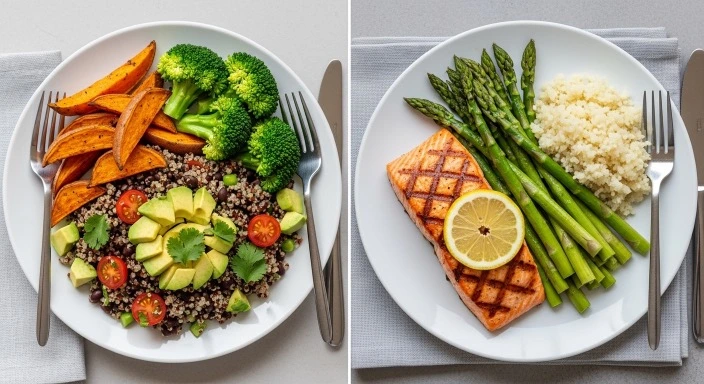
How to build balanced meals for any diet
Balanced meals are not reserved for one type of eater.
Whether you follow keto, vegan, gluten-free, high-protein, weight-conscious, or simply balanced eating, the structure of a well-built plate stays surprisingly consistent.
In 2026, nutrition research continues to reinforce one core idea: long-term health and sustainable eating patterns depend less on rigid labels and more on balanced meal construction. When you understand how to build balanced meals for any diet, you gain flexibility — and flexibility makes eating sustainable.
This guide focuses on one clear goal: how to build balanced meals for any diet in a way that supports structure without stress.
What Does “Balanced” Really Mean in 2026?
Balanced does not mean equal parts of everything. It means combining macronutrients and fiber in proportions that:
- Support steady energy
- Promote satiety
- Help manage blood sugar stability
- Fit your dietary pattern
Public health frameworks such as the Harvard Healthy Eating Plate continue to emphasize:
- Vegetables and fruits as the largest portion
- Adequate protein
- Quality carbohydrates
- Healthy fats in moderation
These principles apply across diet styles.
The 4 Core Components of a Balanced Meal
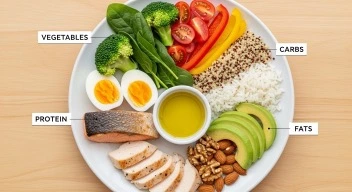
No matter your diet label, balanced meals typically include four elements:
- Fiber-rich vegetables or plant foods
- Adequate protein
- Intentional carbohydrates (or carb alternatives)
- Healthy fats
The proportions shift depending on the diet — but the structure remains.
How to Build Balanced Meals for Any Diet (Step-by-Step Framework)
Let’s break this into a practical system you can apply immediately.
Step 1: Anchor Your Plate with Vegetables
Vegetables add volume, fiber, and micronutrients without excessive calorie density.
In most diet models:
- Vegan: Vegetables + legumes are foundational
- Keto: Non-starchy vegetables support fiber intake
- Gluten-free: Vegetables replace refined grains
- Weight-conscious: Vegetables increase fullness
Practical guideline:
Aim for at least half your plate to be vegetables whenever possible.
Step 2: Choose a Quality Protein Source
Protein supports muscle maintenance and satiety. In 2026, protein adequacy remains a key topic across diet discussions.
Examples by diet:
- Keto: Eggs, salmon, chicken thighs
- Vegan: Lentils, tofu, tempeh
- Gluten-free: Lean meats, legumes
- High-protein: Greek yogurt, fish, lean poultry
- Balanced: Any combination of plant or animal proteins
Protein keeps meals stabilizing rather than snack-driven.
Step 3: Add Smart Carbohydrates (Or Carb Alternatives)
Carbohydrates are not universally “good” or “bad.” Context matters.
Balanced carbohydrate sources may include:
- Whole grains (quinoa, brown rice)
- Legumes
- Sweet potatoes
- Fruit
For lower-carb or keto diets, this shifts to:
- Cauliflower rice
- Zucchini noodles
- Leafy greens
The goal is intentional inclusion — not accidental overload.
Step 4: Use Healthy Fats Strategically
Healthy fats improve flavor, texture, and nutrient absorption.
Sources may include:
- Olive oil
- Avocado
- Nuts and seeds
- Fatty fish
The World Health Organization (WHO) continues to recommend limiting trans fats while allowing moderate unsaturated fat intake.
Fat should enhance a meal — not dominate it (unless following a structured keto plan).
Balanced Meal Examples Across Diet Types
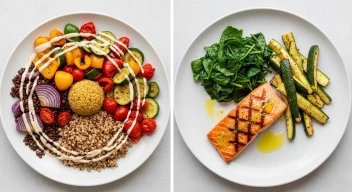
Here’s how the same structure adapts across eating styles.
Balanced Vegan Meal
- Roasted vegetables
- Lentil or chickpea protein
- Quinoa or farro
- Tahini drizzle
Balanced Keto Meal
- Grilled salmon
- Sautéed spinach
- Roasted zucchini
- Olive oil dressing
Balanced Gluten-Free Meal
- Baked chicken
- Brown rice
- Roasted carrots and broccoli
- Light olive oil
Balanced High-Protein Meal
- Greek yogurt bowl with berries
- Chia seeds
- Almonds
Different diets. Same structure.
Common Mistakes When Trying to Build Balanced Meals
1. Overloading One Macronutrient
Too much protein without fiber.
Too many carbs without protein.
Too much fat without vegetables.
Balance prevents extremes.
2. Ignoring Fiber
Fiber supports digestion and satiety. The Academy of Nutrition and Dietetics emphasizes adequate fiber intake across eating patterns.
Even keto plans benefit from non-starchy vegetables.
3. Relying Too Heavily on Processed Substitutes
Gluten-free packaged bread.
Vegan ultra-processed meats.
Keto desserts daily.
Occasional use is fine. Daily dependence reduces nutritional balance.
How to Adjust Portions Without Obsessing
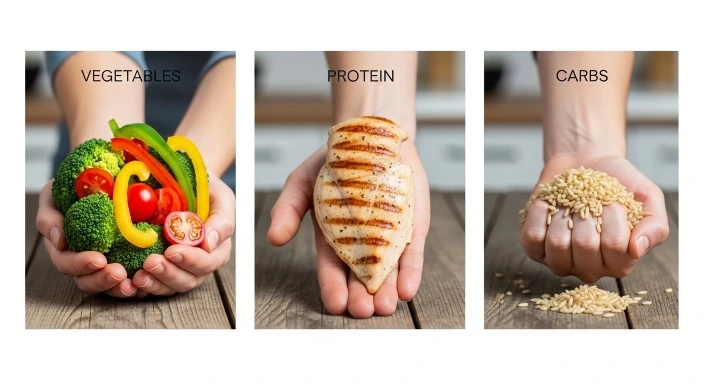
Portion control doesn’t require weighing every gram.
A visual guide:
- ½ vegetables
- ¼ protein
- ¼ whole grains or alternatives
- 1–2 tablespoons healthy fat
This aligns with widely accepted dietary frameworks and works across most eating styles.
Balanced Meals for Weight-Conscious Diets
If weight management is a goal:
- Prioritize protein and fiber
- Avoid liquid calories
- Use cooking methods like roasting, grilling, steaming
- Moderate added fats
Balanced meals naturally support satiety, reducing the need for constant snacking.
For foundational guidance, see our article Healthy Cooking Basics You Need to Know to understand cooking methods that support balance.
Frequently Asked Questions
Can balanced meals work for keto?
Yes. The carbohydrate portion shifts, but protein, vegetables, and healthy fats remain core.
Is balanced eating the same as calorie counting?
No. Balance focuses on composition rather than strict numbers.
Do I need carbs to build balanced meals?
Not necessarily. Lower-carb diets adjust carb sources, but fiber and vegetables remain important.
What if I mix diet styles?
That’s common. Balanced structure supports flexibility.
How do I start building balanced meals daily?
Begin by planning protein first, then add vegetables, then adjust carbs and fats intentionally.
To explore further:
- Start with What Is RecipeToDiet? How Diet-Focused Recipes Help You Eat Better for structured diet-focused cooking.
- Read How to Choose the Right Diet for Your Body if you’re still exploring your approach.
- Try a balanced recipe like Lighter Chocolate Matcha Cake (Balanced & Diet-Friendly) for mindful dessert options.
Balanced meals are easier when recipes are built with structure in mind.
The Takeaway
Learning how to build balanced meals for any diet removes confusion.
When you understand plate structure, protein balance, fiber inclusion, and strategic fats, you gain flexibility — and flexibility makes healthy eating sustainable.
Balanced meals are not about perfection. They’re about consistency.
And consistency builds long-term results.
Our Authority Sources
To ensure accuracy as of February 2026, guidance reflects established public health and nutrition organizations:
- Harvard T.H. Chan School of Public Health – Research-based balanced plate framework
- Academy of Nutrition and Dietetics – Evidence-informed guidance on macronutrients and fiber
- World Health Organization (WHO) – Global recommendations on dietary fat quality
- National Institutes of Health (NIH) – Foundational nutrition research